
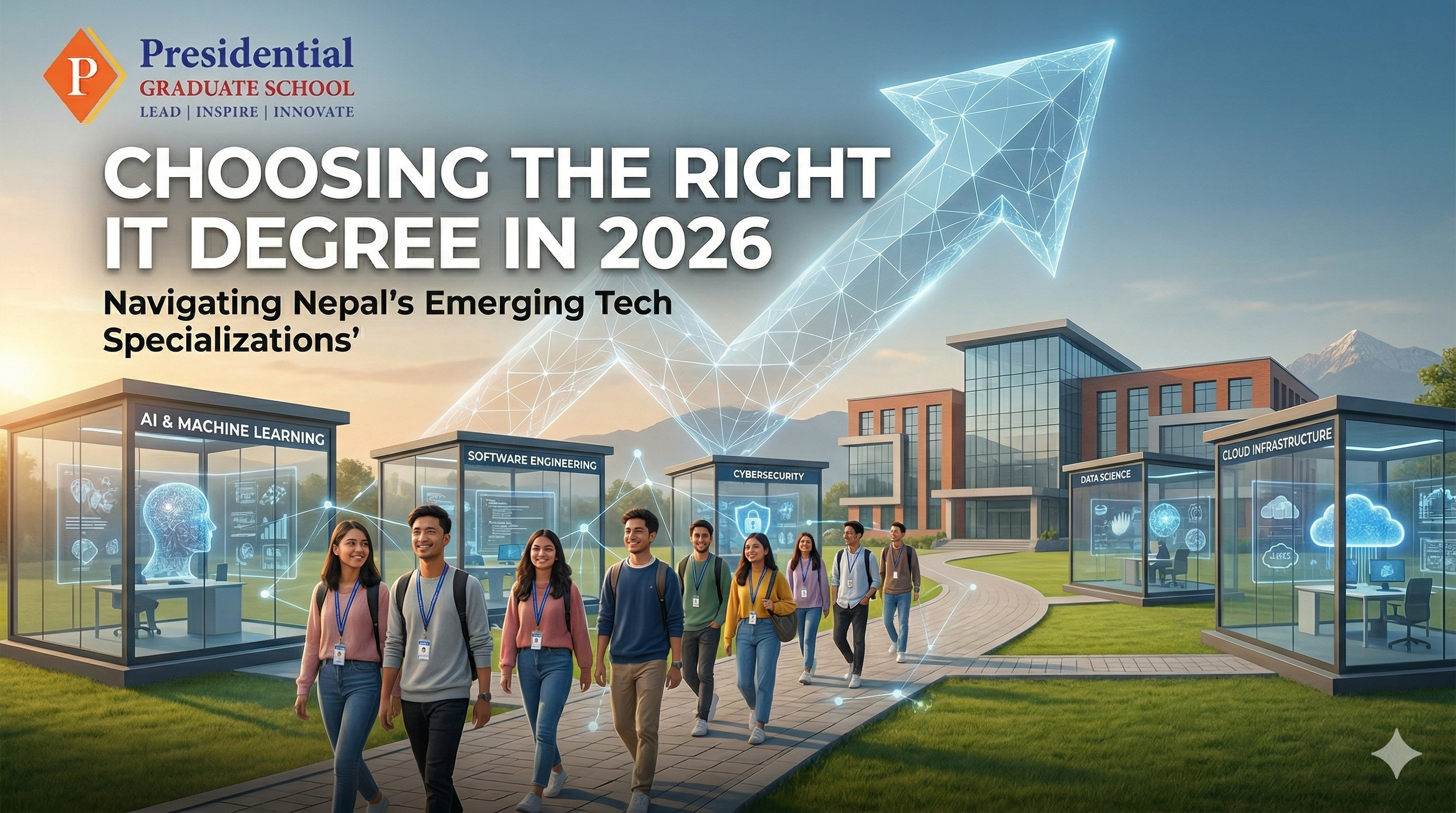
In a world where technology is no longer a support function but the backbone of every industry, choosing an IT degree is less about entering the tech field and more about positioning yourself within it.
Today, the question is not “Should I study IT?” it’s “Which IT specialization will remain relevant in the next decade?”
The Shift, From General IT to Specialized Expertise
A decade ago, a general IT or Computer Science degree was enough to secure a stable job. Today, the landscape has changed dramatically:
- Companies are no longer hiring “generalists” they seek domain specific experts
- Automation is replacing repetitive roles
- AI is reshaping how software, data, and security systems are built
This means your degree choice must align with emerging industry ecosystems, not just current trends.
High Impact IT Degrees and Their Strategic Value
1. Computer Science & AI Focused Degrees
This is no longer just about coding. Modern computer science is deeply tied to:
- Artificial Intelligence
- Machine Learning
- Automation systems
Strategic Advantage:
Graduates in this field are building the future of decision making systems from recommendation engines to predictive analytics.
Ideal for students aiming for global tech roles or research driven careers
2. Software Engineering (Product Focused Learning)
Unlike traditional programming degrees, software engineering emphasizes:
- Scalable system design
- Agile development practices
- Real world product deployment
Strategic Advantage:
Companies today value engineers who can build, deploy, and maintain products, not just write code.
Highly relevant for Nepal’s growing outsourcing and startup ecosystem
3. Cybersecurity & Digital Risk Management
With rising cyber threats, cybersecurity is evolving beyond IT support into a business-critical function.
What makes it powerful:
- Every organization is a potential target
- Regulations and compliance are increasing globally
- Security is now tied to brand trust and financial stability
This field offers high demand with relatively low talent supply, making it a strong long-term career choice
4. Data Science & Business Intelligence
Data is now considered the “new oil,” but raw data alone has no value without interpretation.
This degree blends:
- Statistics
- Programming
- Business understanding
Strategic Advantage:
Professionals in this field influence decision-making at the highest level of organizations.
Particularly useful in sectors like banking, e-commerce, healthcare, and fintech
5. Networking, Cloud & Infrastructure (The Hidden Backbone)
While often overlooked, this domain powers everything:
- Cloud computing (AWS, Azure)
- Network architecture
- DevOps systems
Strategic Advantage:
As companies move to cloud-based systems, demand for infrastructure experts is rapidly increasing.
One of the most stable and globally transferable IT careers
Nepal Context, Where Opportunity is Actually Growing
While global trends matter, students in Nepal must align with local + global hybrid opportunities.
Key realities in Nepal:
- IT exports and outsourcing are expanding rapidly
- Startups are increasing, especially in fintech and SaaS
- Remote work is opening access to international markets
What this means for students:
- You don’t need to leave Nepal to work globally
- Skills matter more than degrees alone
- Specialization gives you a competitive edge in a crowded market
The Biggest Mistake Students Make
Many students choose IT degrees based on:
- Popularity
- Peer pressure
- Lack of awareness
But the real risk is;
Graduating with generic skills in a specialized job market
Smart approach:
- Choose a degree based on industry direction, not trend hype
- Combine academics with practical exposure (internships, projects, freelancing)
- Focus on building a portfolio, not just a certificate
Beyond the Degree - What Actually Makes You Employable
Employers today evaluate:
- Problem solving ability
- Real world project experience
- Adaptability to new technologies
Not just:
- GPA
- Theoretical knowledge
A strong IT career is built on skills + specialization + continuous learning
Conclusion
An IT degree is no longer a guaranteed pathway to success it is a foundation. The real value lies in how strategically you choose and use it.
In 2026 and beyond, the most successful students will be those who:
- Think beyond traditional roles
- Align their education with industry demand
- Continuously evolve with technology
FAQs
1. Which IT specialization has the best future in Nepal?
Software Development, Data Science, and Cybersecurity currently offer the strongest growth due to outsourcing demand and global remote work opportunities.
2. Is a general IT degree still valuable?
Yes, but only if combined with specialization (e.g., cloud, AI, or security). A general degree alone is no longer enough.
3. Can Nepali students compete in the global IT market?
Absolutely. Many already do, especially in freelancing and remote jobs. The key factor is skills and portfolio, not location.
4. Which IT field is easiest to start in Nepal?
Web development and digital marketing are relatively easier entry points, but long-term growth depends on upskilling.
5. Do colleges in Nepal provide enough practical exposure?
Some do, but students often need to take initiative through:
- Online learning
- Internships
- Personal projects
6. Is studying abroad necessary for IT?
Not necessarily. With the rise of remote work, students in Nepal can access global opportunities without leaving the country.
7. What should students focus on during their IT degree?
- Building real world projects
- Learning industry tools
- Networking and internships